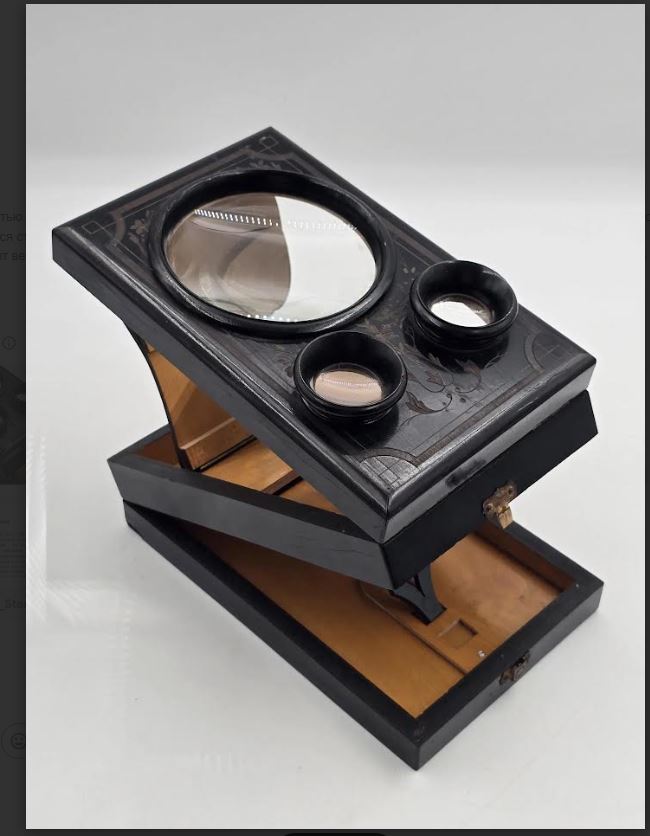
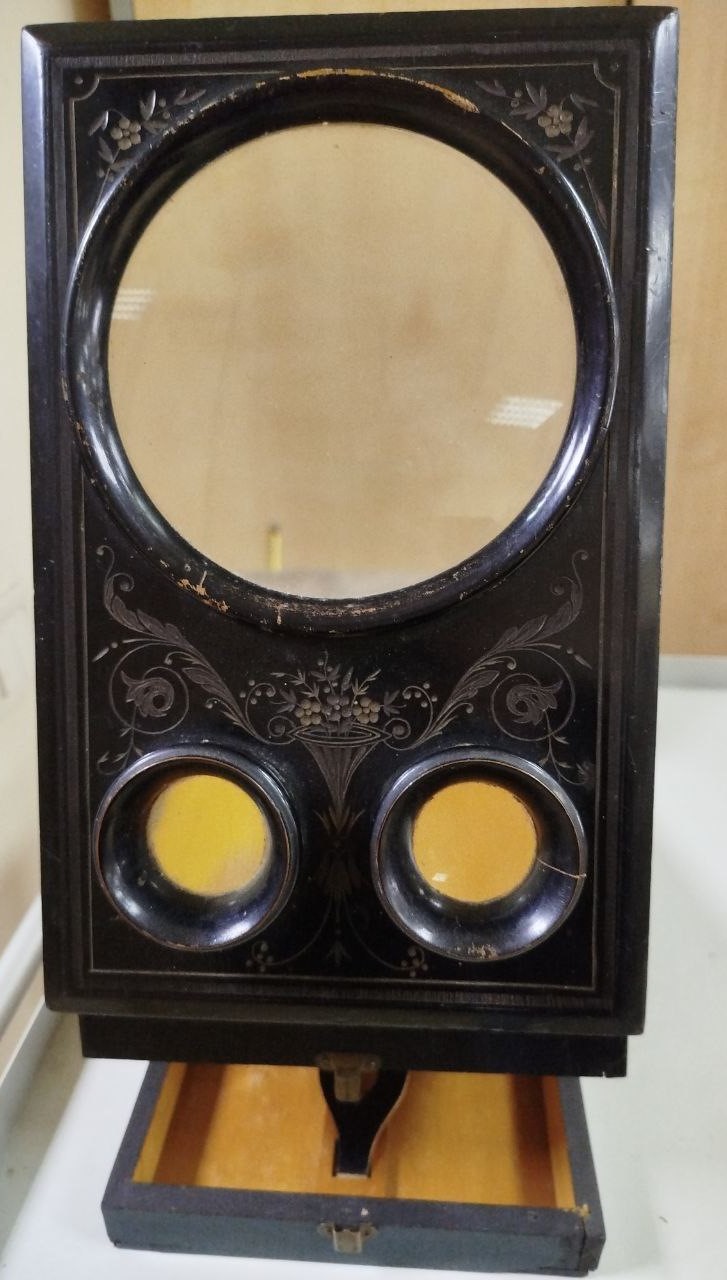
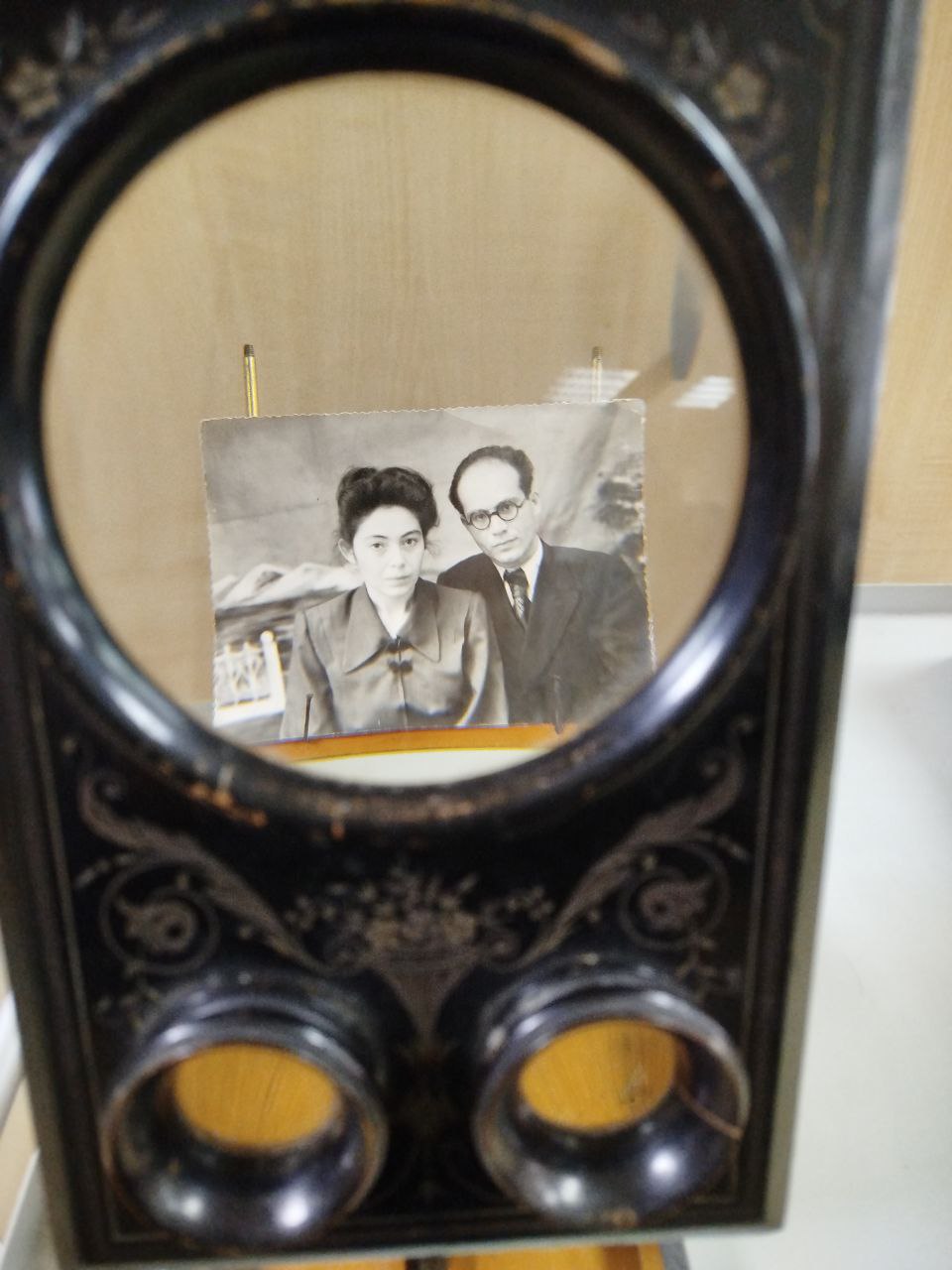
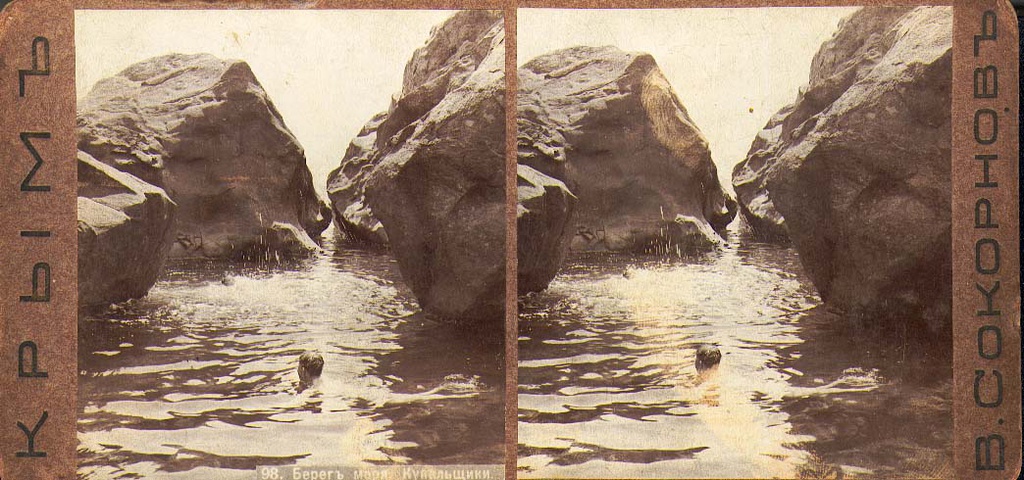
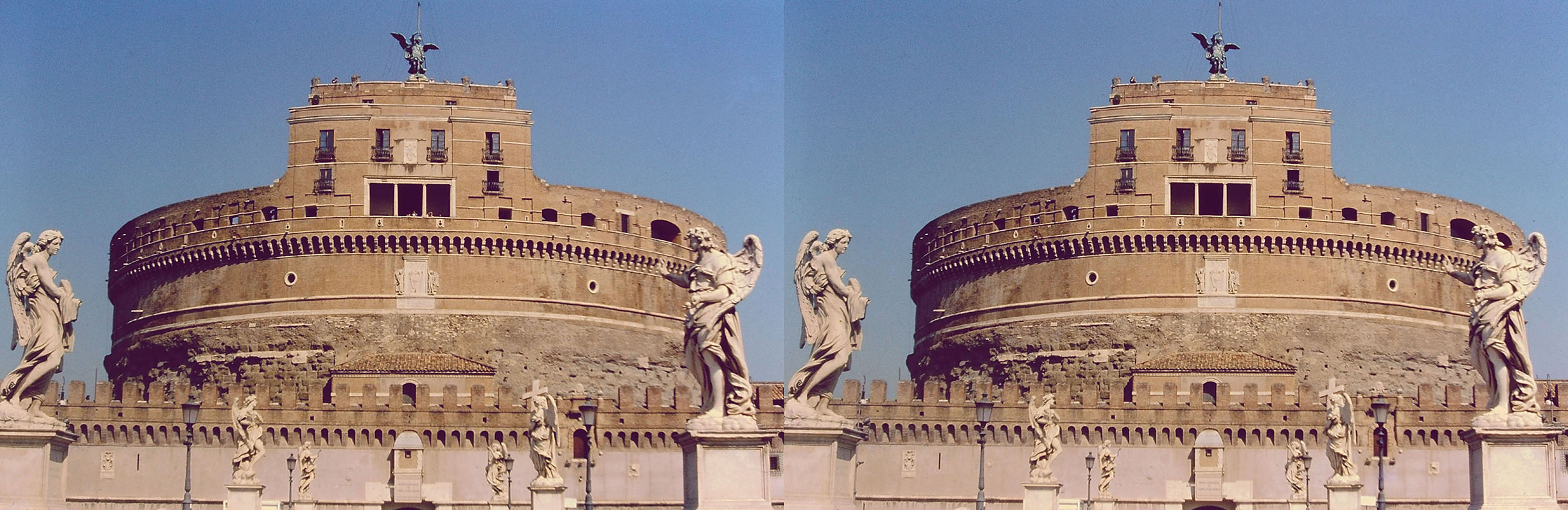
In the museum, the past becomes reality thanks to preserved monuments, exhibits and knowledge. Our Museum is a chronicle of history, achievements of mankind. Among the unique, peculiar and unrepeatable things is a folding stereoscope from the funds of the Museum “Jewish Memory and Holocaust in Ukraine” – a desktop graphoscope from 1910.
Today, we are familiar with the 3D effect and usually think of “3D” films as the achievements of modern technology and computers. However, Leonardo da Vinci described in detail the ability of the human brain to create a 3D effect.
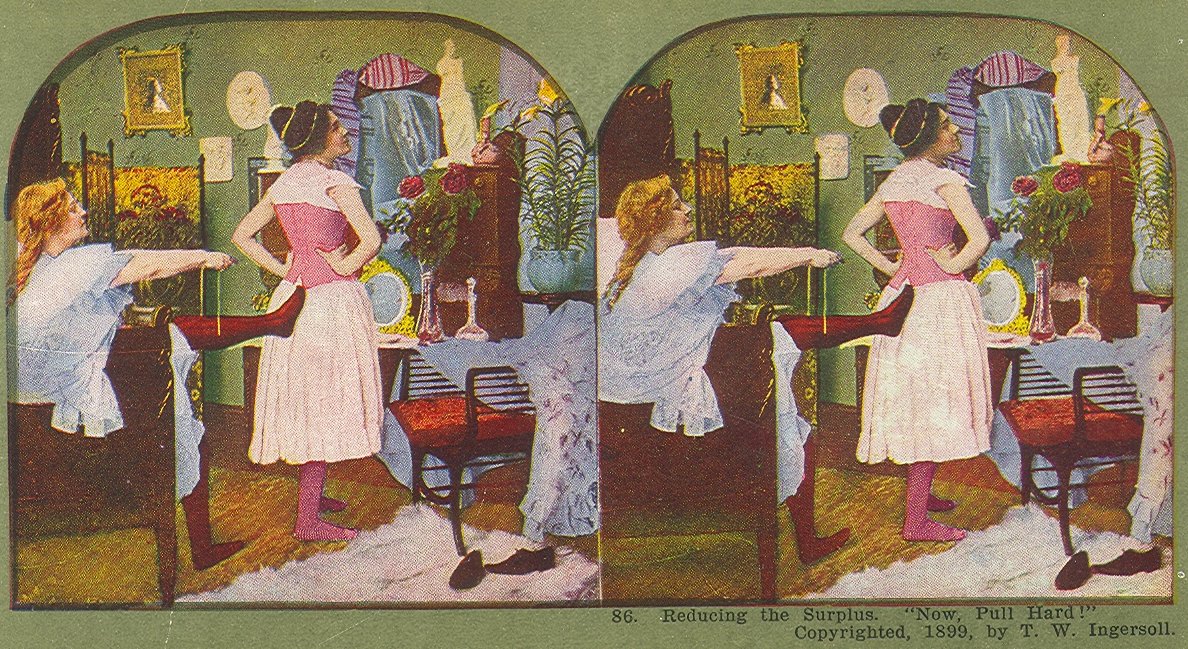
A stereoscope looks like a small box with two double lenses. The principle of operation of the device: if you take a picture of a scene from two points located at a certain distance from each other (the distance between a person's eyes), and then arrange a pair of resulting pictures (the so-called stereo pair) so that one eye sees only one picture, and the other eye sees the second, then the person will see a “three-dimensional” image.
The devices were portable, desktop. Through the lenses of the stereoscope, it was possible to view stereographic cards, which have come down to us in huge quantities. They differ from open ones in that they had double images. Especially used were plots related to travel, world landmarks, disasters, ghosts, as well as humorous scenes.
The first stereoscope was invented in 1837 by the Englishman Charles Wheatstone together with the optician R. Murray for viewing images from different angles, with the effect of three-dimensionality. According to other sources, the first stereoscope was invented in 1829 by a mathematics teacher from Edinburgh (Scotland) Mr. Eliot. In 1849, Sir David Brewster invented a stereoscope with two magnifying lenses located at 2.5 inches from each other, that is, at the usual distance between the human eyes. He limited the height to three inches. In 1856, more than a million Brewster prism stereoscopes were sold in England alone.
The second wave of interest in stereoscopes began in the late 1930s after the spread of color film. Inexpensive devices made of plastic or cardboard allowed for high-quality three-dimensional images from small-format slides. The most popular in the USA and Western Europe until the middle of the 20th century were the American stereoscopes “View-Master”, which supplied cardboard discs with seven stereo pairs. In the USSR, stereoscopes made in the German Democratic Republic, designed as children's toys, were sold.
Stereoscopes continued to be used until the end of World War II. During the war, they were used to decipher aerial photographs, mainly to create topographic maps from them. With the further development of the film industry, the stereoscope lost its popularity, but not its value. Today, there are several projects to create a stereoscope for use with a smartphone screen.
Lyudmila Sandul