




We always expect Christmas miracles and New Year's gifts. Museum workers are no exception! For the Museum “Jewish Memory and Holocaust in Ukraine”, such a miracle was the new unique exhibits. These are ancient measuring instruments donated to our funds by a member of the Dnipro Jewish Community, Eliezer (Olexandr) Goshkovich, together with a friend of the Museum, secretary of the rabbinical court, Rabbi Avraham Yosif Yitzhak Karshenbaum.
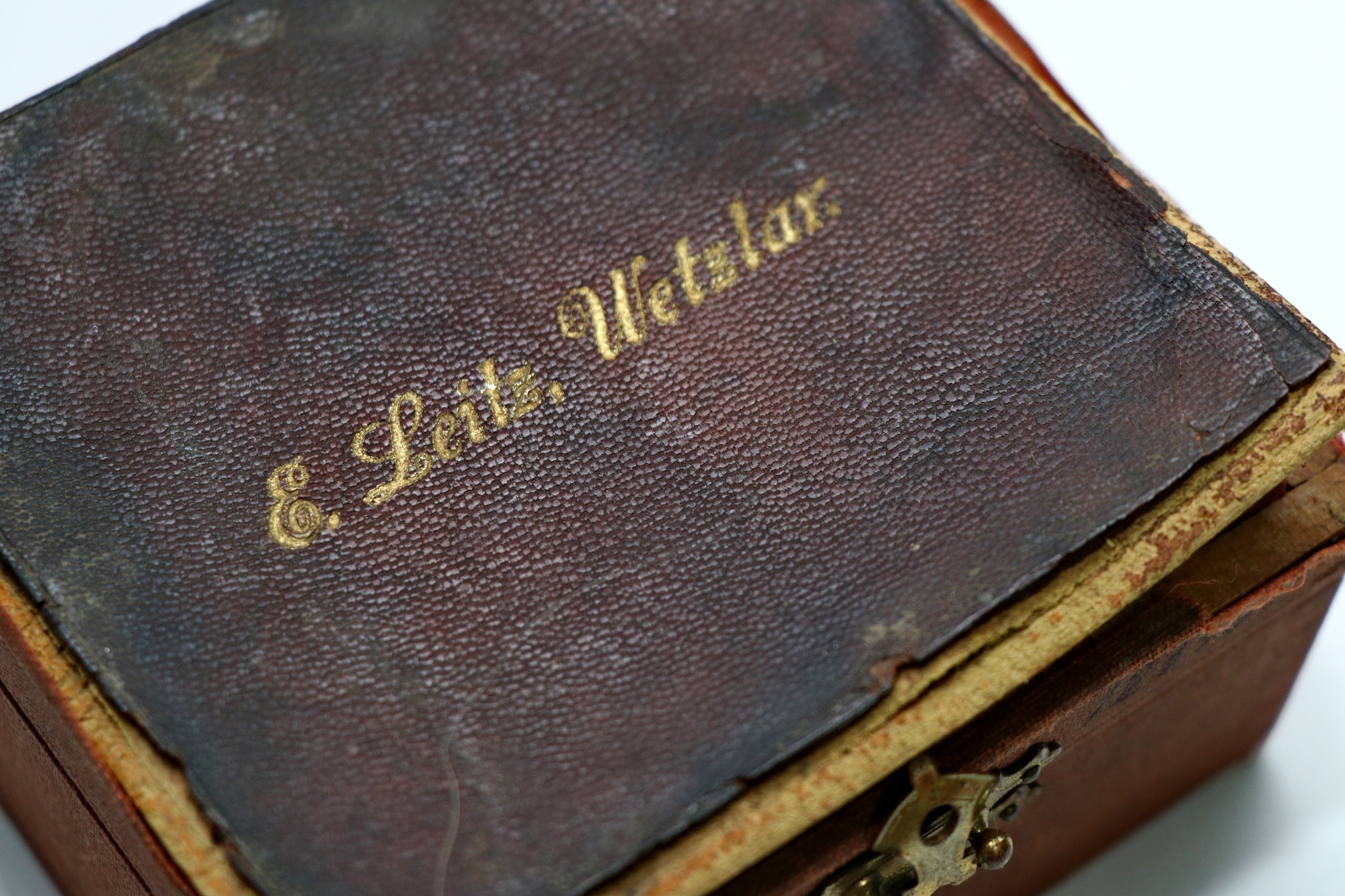
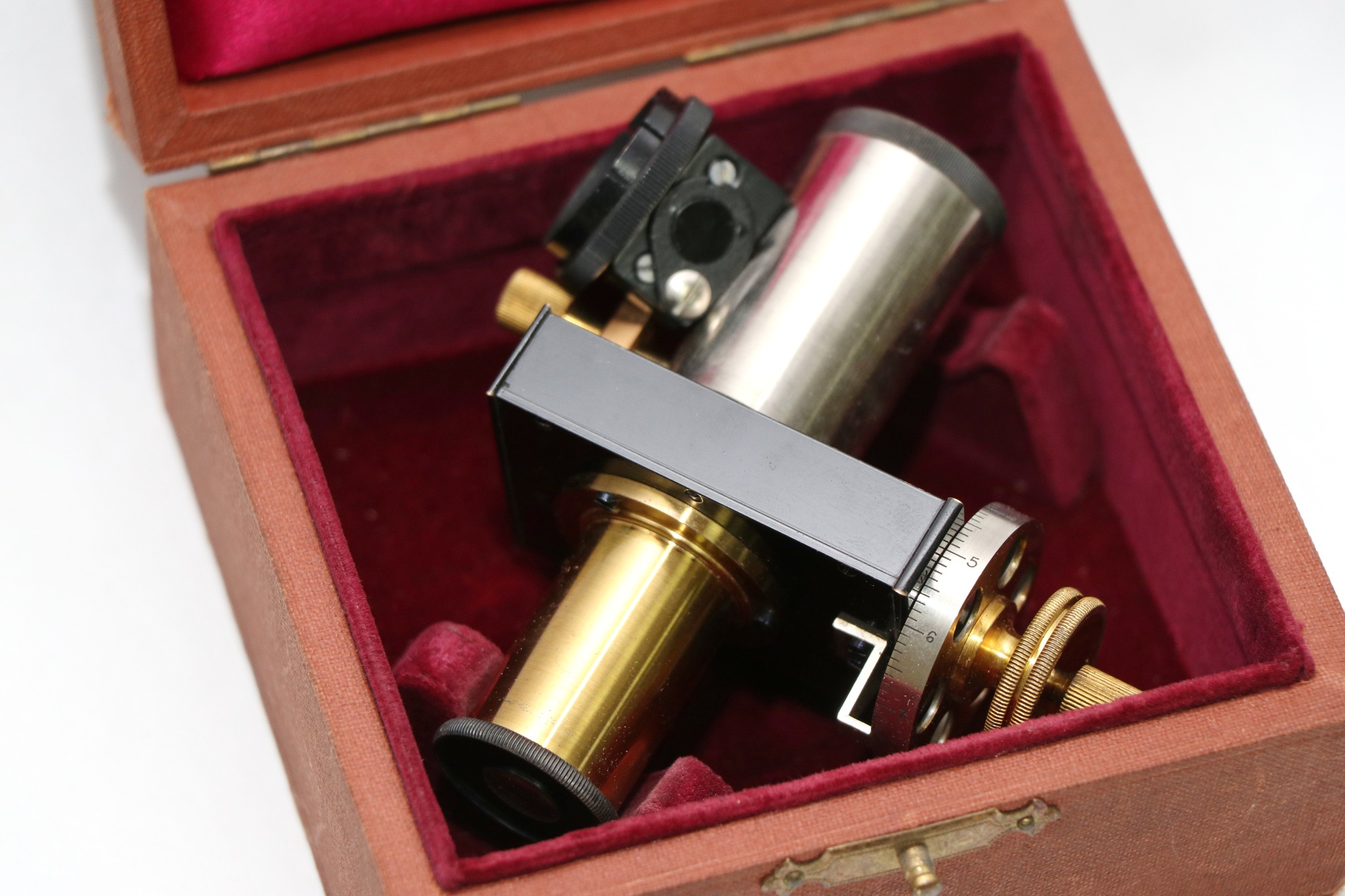
The first thing that catches your eye is the case with the golden inscription “E. Leitz, Wetzlar”. The case contains the original microscope eyepiece. The company E. Leitz, Wetzlar is a historic German optical company founded in 1849 by Karl Kellner, which later became the world-famous Leica brand, specializing in high-quality microscopes, cameras and other precision optics. In 1869, Ernst Leitz became the sole owner, named after himself, and his son Ernst Leitz II in the 1920s began mass production of the legendary Leica cameras, which made the brand world-famous. The headquarters are still located in Wetzlar (Germany). Today, the company exists several separate but related divisions: Leica Microsystems, which manufactures microscopes, and Leica Camera AG, which produces cameras.
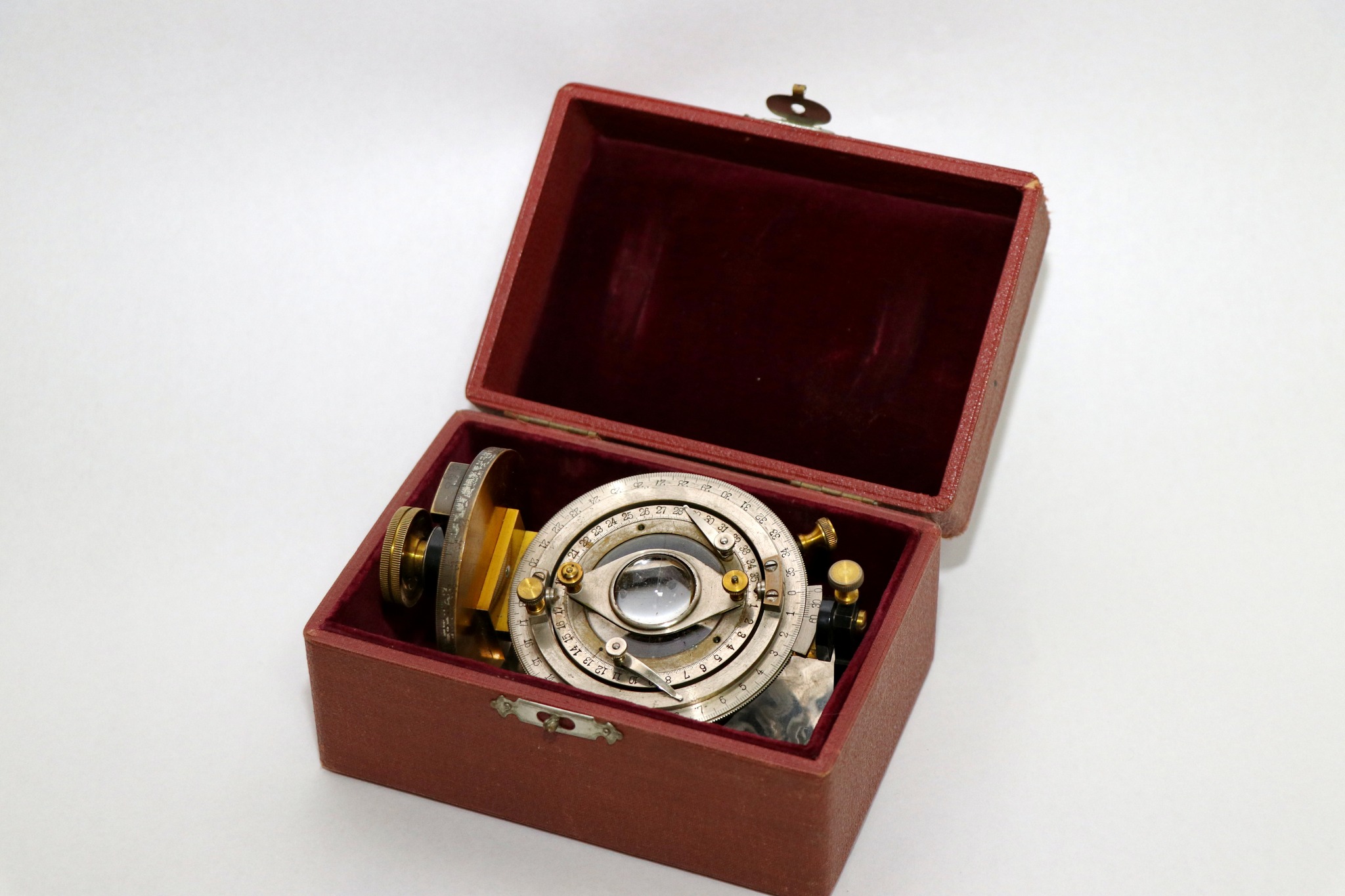
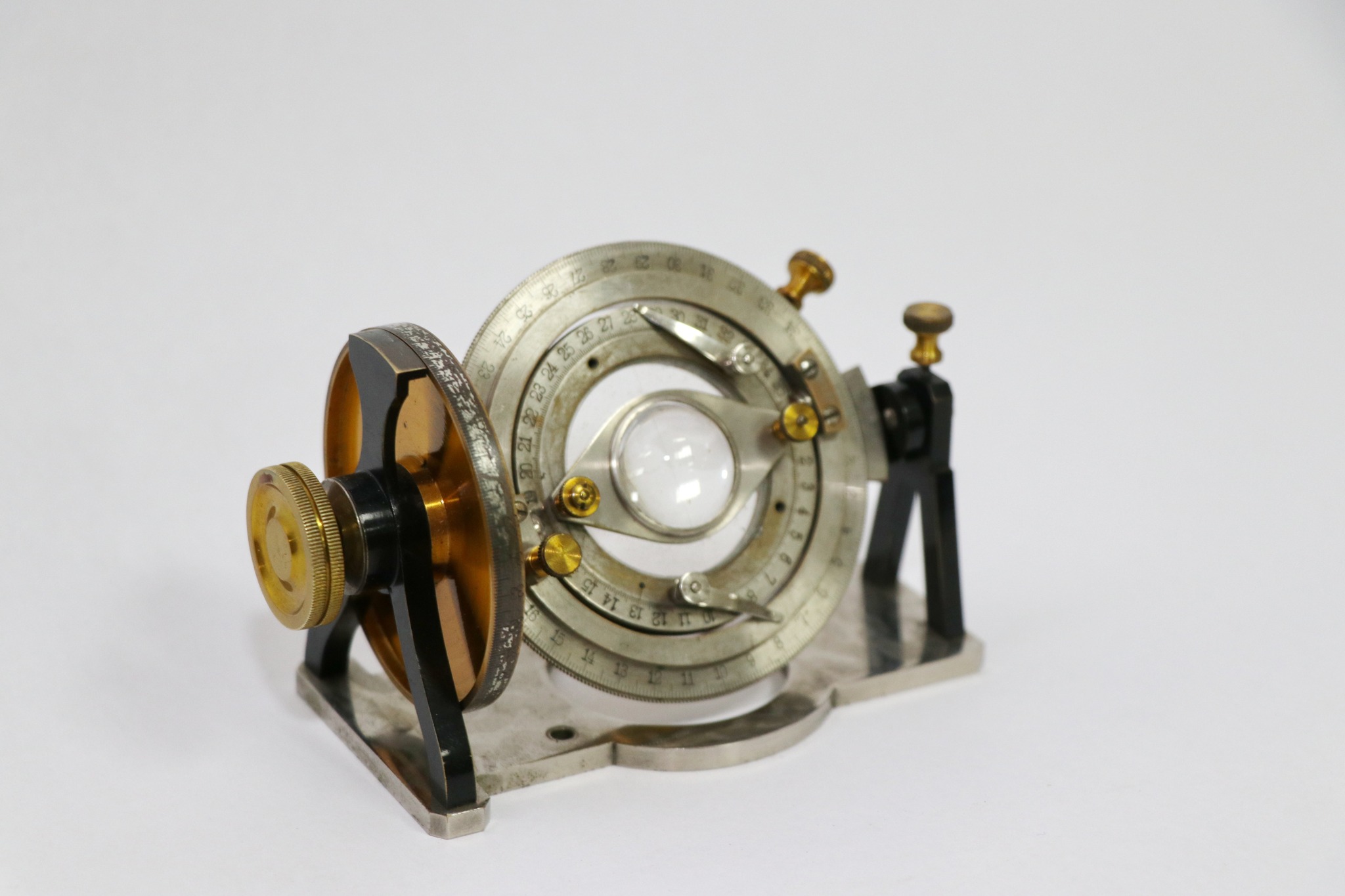
Next you can see the Fedorov universal stage. This is a rotating device, located on the stage of a polarizing microscope (or as a single stage), which allows you to change the position of the crystal in the form of a thin section for measuring optical constants. Several characteristics are determined using the Fedorov stage. The device is named after Evgraf Fedorov, who created its initial model in 1891. Then the design of the stage was improved by the author, and in 1896 Fedorov described a model with 4 axes. The fifth axis was added by the American researcher Richard Conrad Emmons in 1929. Until the 1960s. this device was actively used; later it was supplanted by other inventions. Today, few people know how to use this device.
Also of interest is an old pocket barometer made by the firm of the Austrian watchmaker Johann Holzmann (1763–1827), which was in Vienna. It is an aneroid barometer that works without liquid, using the deformation of the case from changes in pressure to move the needle. It is used to measure atmospheric pressure.
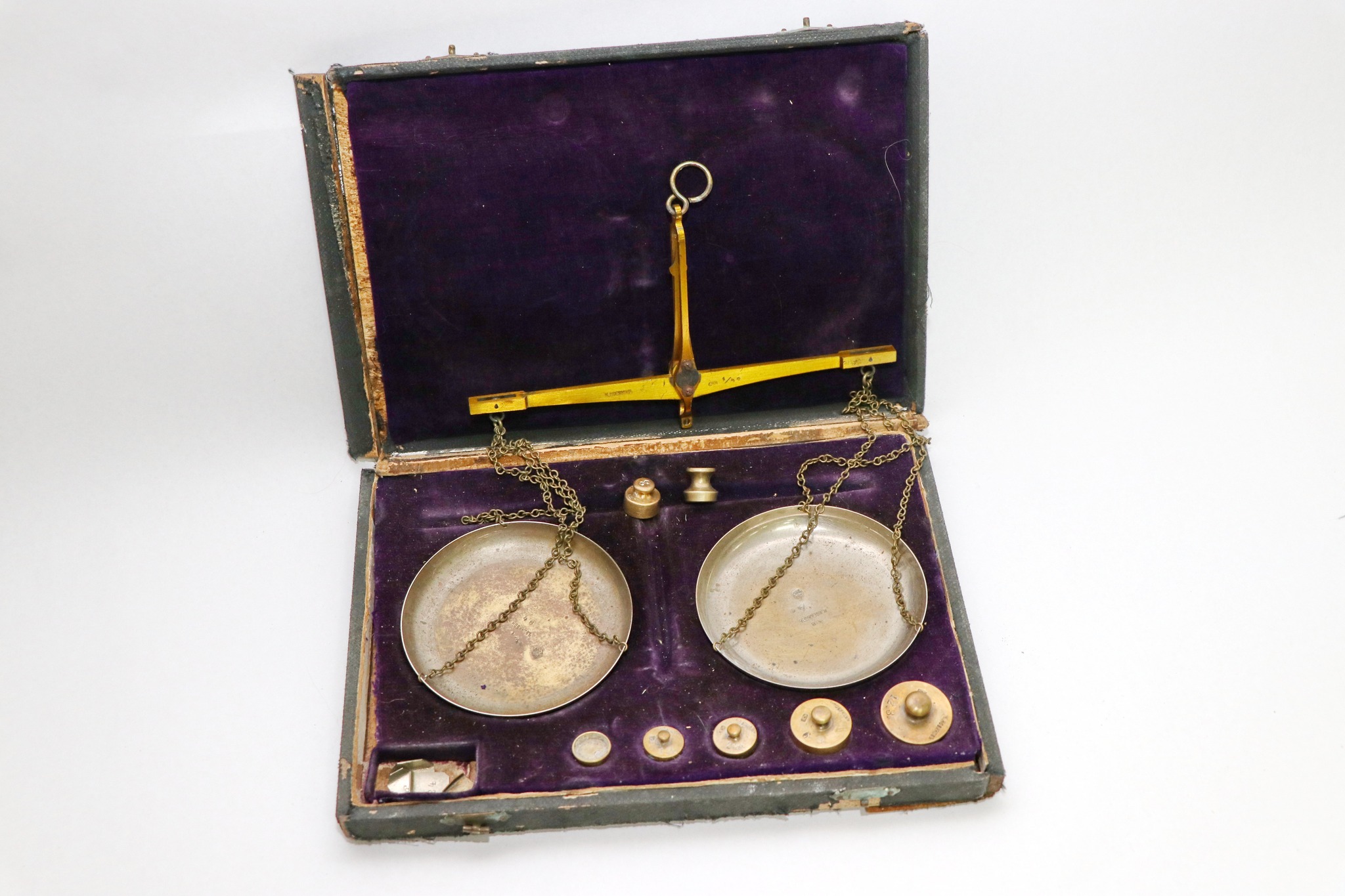
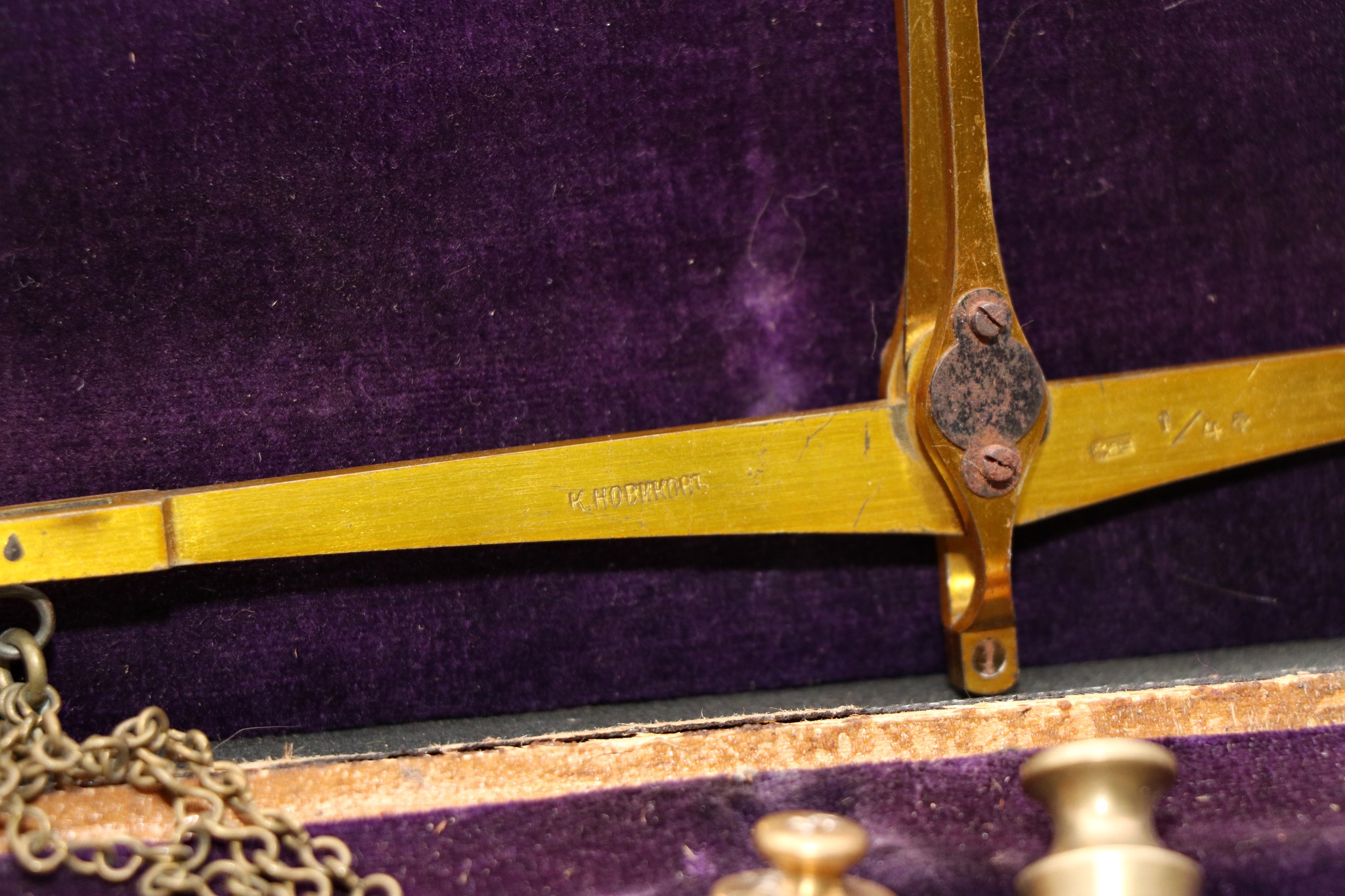
The laboratory (jewelry) scales are noteworthy. The scales were manufactured at the end of the 19th century in K. Novikov's workshop to produce scales and weights. The uniqueness of the exhibit lies in the fact that the factory box and a full set of weights have been preserved.
The museum is very grateful for such donations! Soon the exhibits will take their rightful place in our exhibition halls.