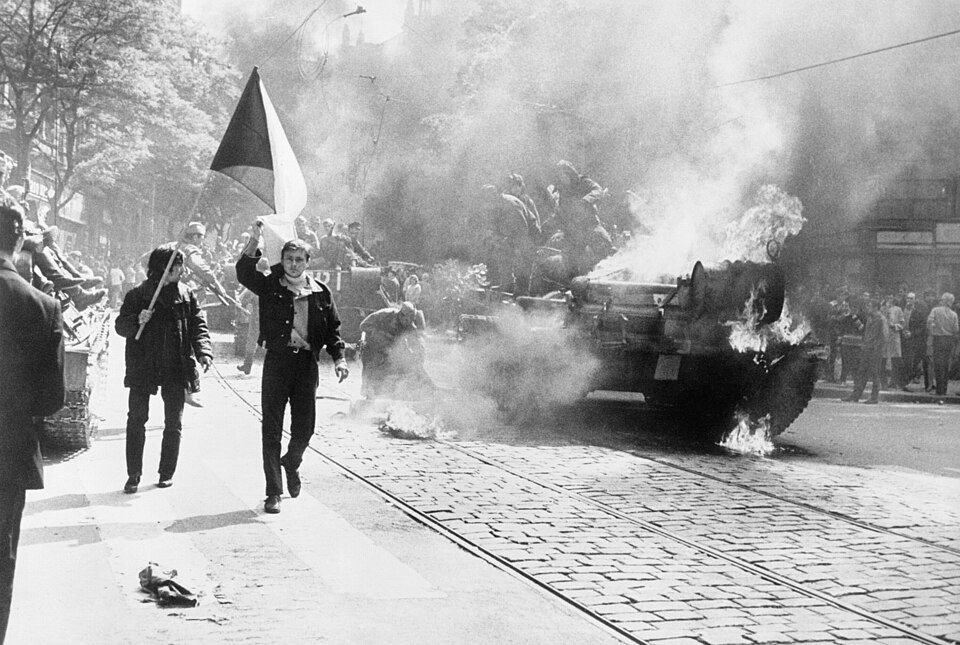
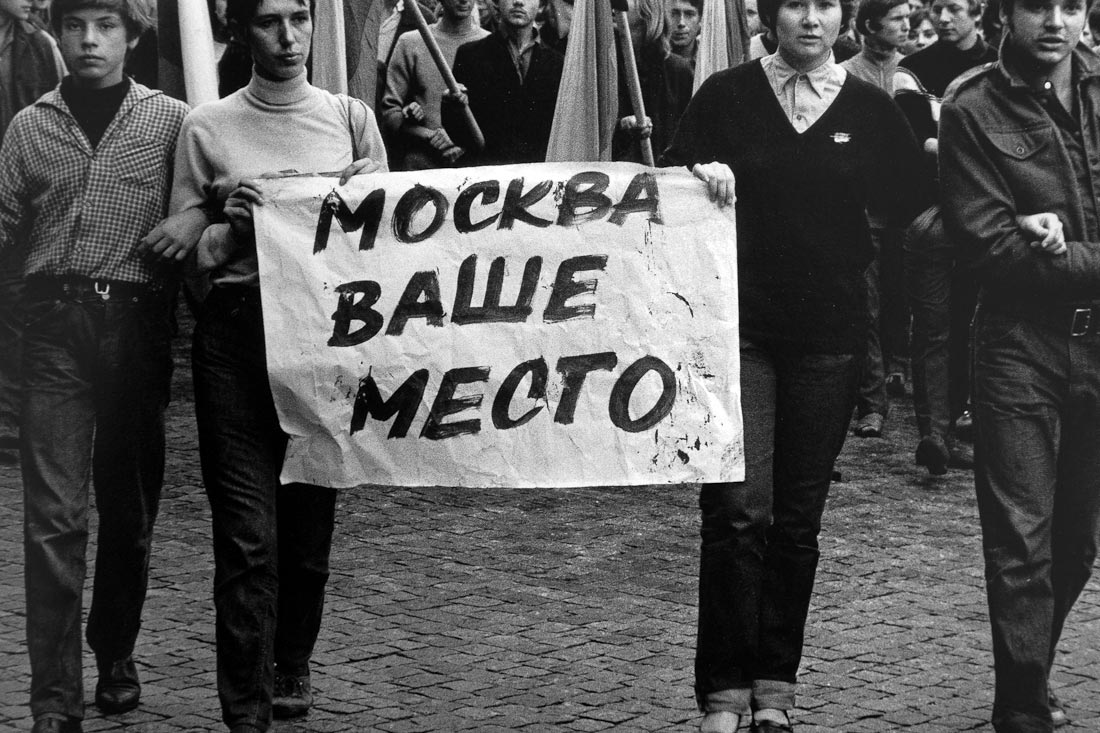
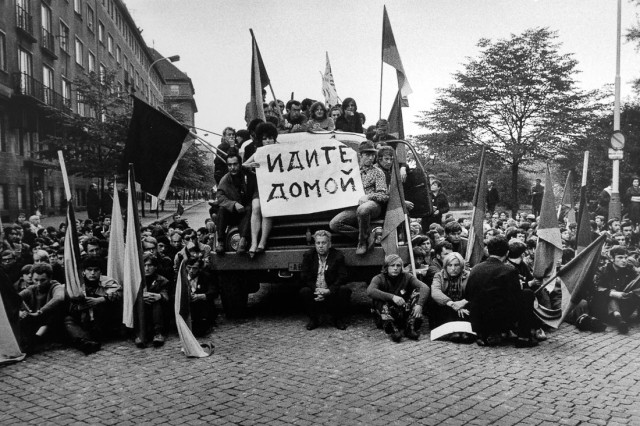
On the night of August 21, 1968, the Warsaw Pact troops led by the USSR crossed the borders of Czechoslovakia (the so-called Operation Danube). About half a million soldiers and more than six thousand tanks entered Prague and other cities to forcefully stop the “Prague Spring” – an attempt by the Czechoslovak leadership, led by Alexander Dubček, to build “socialism with a human face”. This intervention became one of the most dramatic pages in the history of post-war Europe and finally dispelled illusions about the possibility of internal liberalization of the communist regime.
While Soviet propaganda declared “fraternal assistance,” representatives of the dissident movement and democratically minded intelligentsia expressed direct protest the aggression.
Its symbol was the “Demonstration of the Seven,” which took place on August 25, 1968, on Red Square in Moscow. A significant part of the participants in the action, who came out with the slogans “For your and our freedom!”, were representatives of the Jewish intelligentsia – literary critic and translator Larisa Bogoraz, poet and human rights activist Natalia Gorbanevskaya, physicist Pavlo Litvinov, poet Vadim Delaunay, art critic Viktor Fainberg and others.
Despite understanding the inevitability of arrest, camps, and punitive psychiatry, they publicly declared their solidarity with the people of Czechoslovakia. Larisa Bogoraz later recalled that this step was a matter of personal dignity and the impossibility of remaining silent.
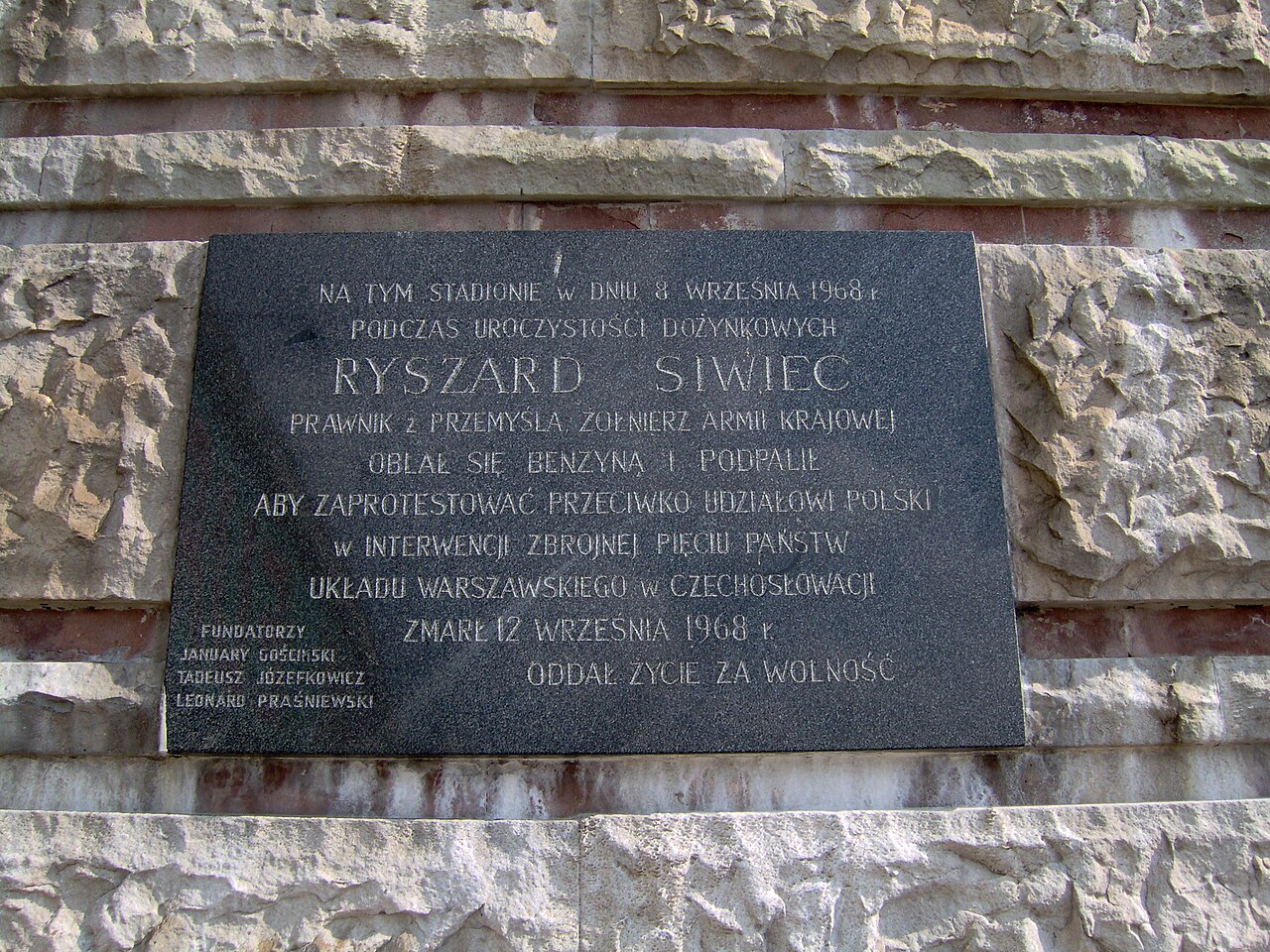
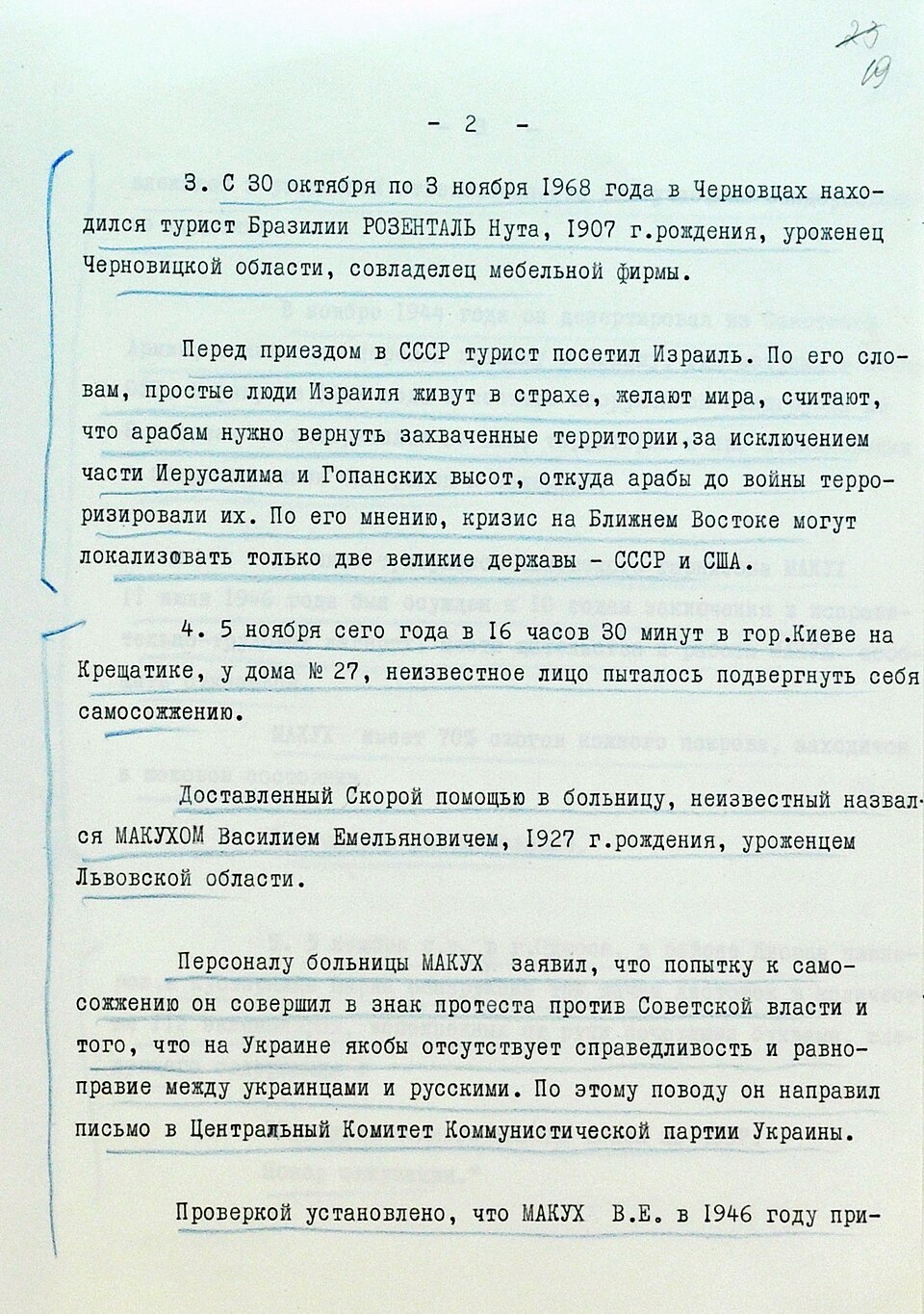
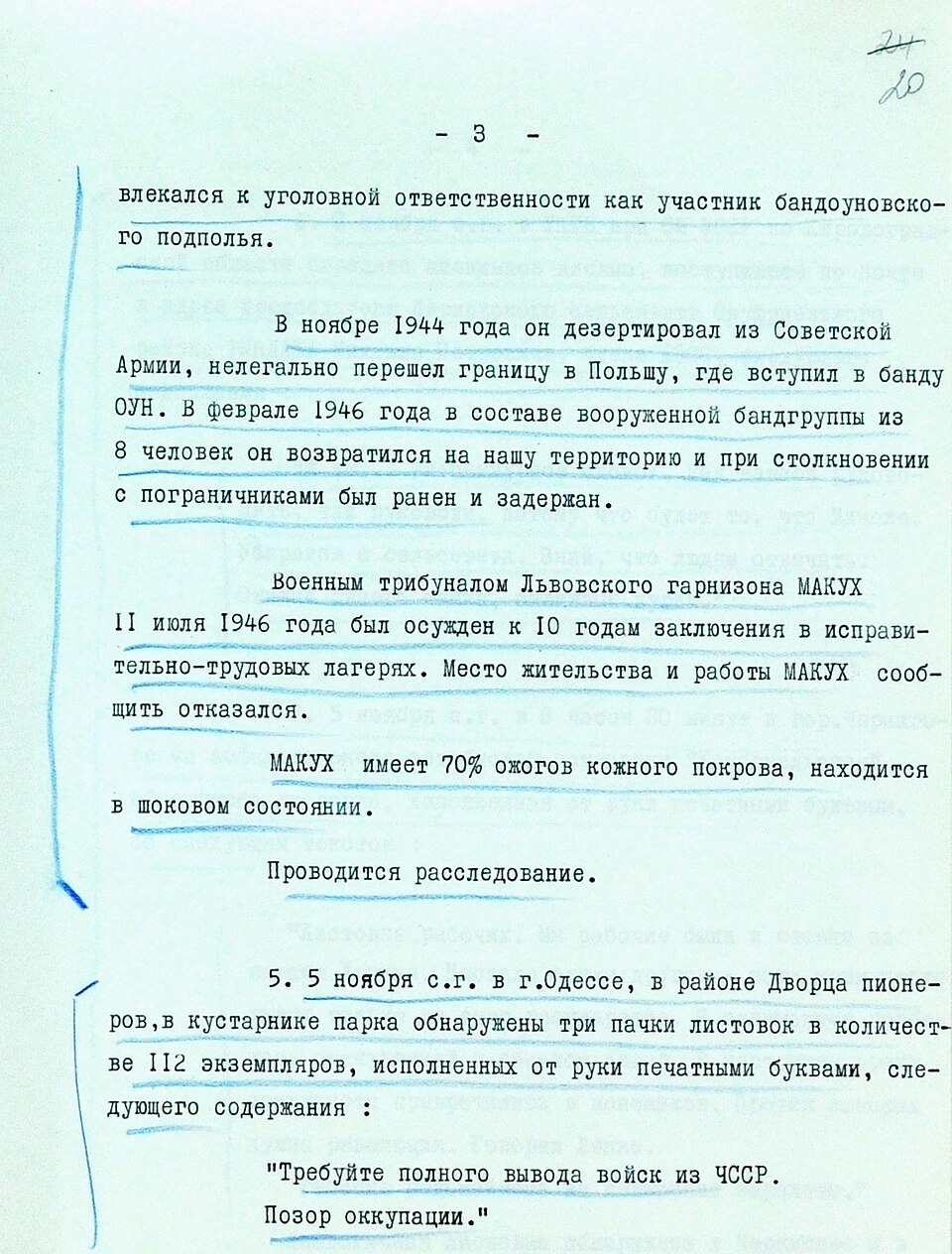
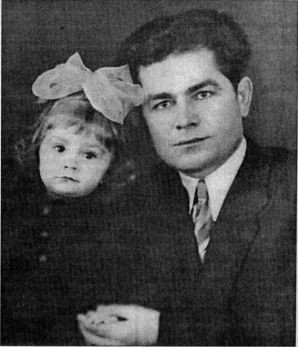
Protests in the USSR and other countries of the socialist camp took on extremely dramatic forms. Thus, on September 8, 1968, a father of five children, an accountant from Przemyśl, a graduate of the Faculty of Philosophy of Lviv University, and a former soldier of the Home Army, Ryszard Siewiec (1909-1968), committed self-immolation in protest against the participation of the troops of the Polish People's Republic in the occupation of Czechoslovakia. Despair from the actions of the communist regime both inside and outside Ukraine, as well as the desire to draw people's attention to the Russification course of the USSR authorities, were the motives for the actions of Vasyl Makukh (1927-1968), a resident of the Dnipro[1], who committed self-immolation on Khreshchatyk in Kyiv on November 5 of the same year.
The text of the information message of the State Security Committee of the Ukrainian SSR, which discussed the act of V. Makukh, also contained a message about the emergency situation in Odessa, namely, about the discovery of three packages of leaflets (112 copies) with appeals to people to demand the withdrawal of Soviet troops from Czechoslovakia.
The 1968 invasion took place against the backdrop of growing state anti-Semitism in the USSR and other countries of Central and Eastern Europe that were under Soviet control. The painful reaction of the Soviet leadership to Israel’s victory in the Six-Day War of 1967 was expressed in condemnation of the “crimes of Zionism.” It is also worth mentioning the rise of youth movements in Western Europe and even within the countries of the so-called “people’s democracy,” such as Poland. The Moscow-controlled leaders of the ruling Polish United Workers’ Party initiated an anti-Semitic campaign, seeking to present the youth protest as the result of the activities of hostile Zionist circles. The result was the persecution of Polish Jews and a wave of emigration of the latter from the country.
The Soviet press launched a large-scale campaign to discredit the Czechoslovak reforms, often claiming that the “counter-revolution” in Prague was allegedly caused by “Zionist forces” and figures of Jewish origin among Dubček's entourage (such as Eduard Goldštukker or František Kriegel).
For many Jewish intellectuals in the USSR, including those from the generation of the so-called “children of the 20th Congress,” the occupation of Prague proved that attempts to democratize the Soviet regime were futile.
If until August 1968, part of the Jewish elite was oriented towards general democratic human rights resistance within the USSR, then after the events in Czechoslovakia there was a massive reorientation towards fighting for the right to travel to Israel and Western countries.
The events of August 21, 1968, became a watershed that finally dispelled the illusions of many loyal or apolitical intellectuals about the possibility of modernization processes within the Soviet camp, and demonstrated the utopian nature of hopes for its democratization.
Yegor Vradii
[1] In 1926 - 2016 the city was called Dnipropetrovsk