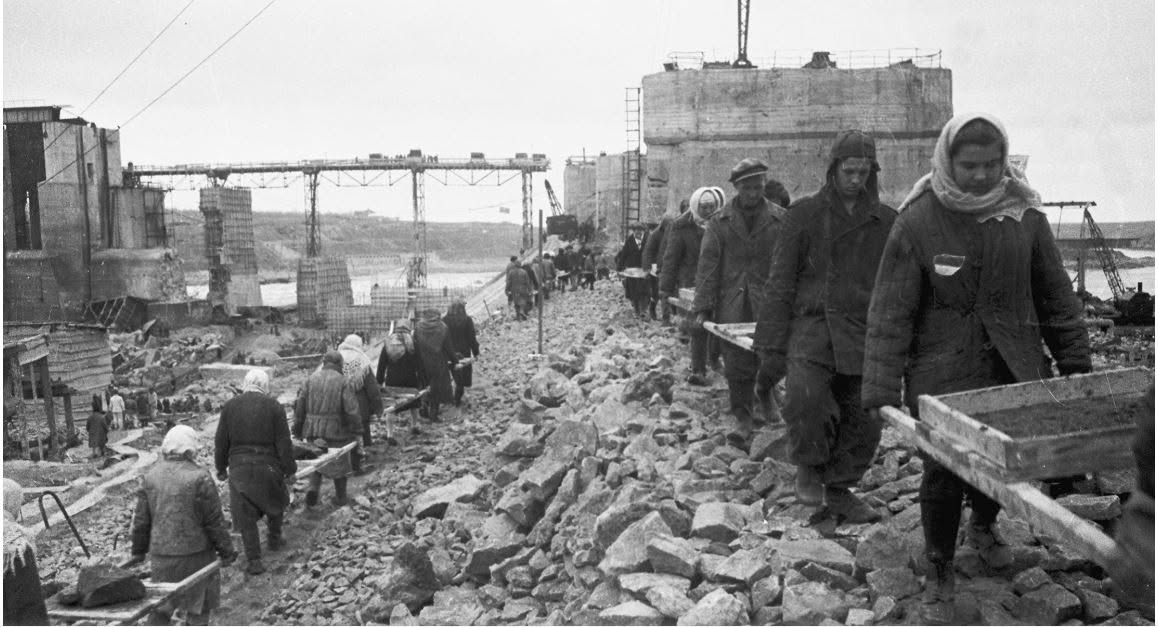
The construction of the Dnieper Hydroelectric Power Plant was part of a large-scale plan for the electrification of the Soviet Union, adopted in the early 1920s. The plan was implemented already during the first five-year plan: American technology was used, consultations with engineers from the United States were provided, and as was usual in the process of Stalinist industrialization, unpaid and irregular labor of prisoners. In 1932, the first hydroelectric unit of the power plant was launched; before the start of World War II, the Dnieper Hydroelectric Power Plant had already become the largest in Europe and the third in the world in terms of capacity.
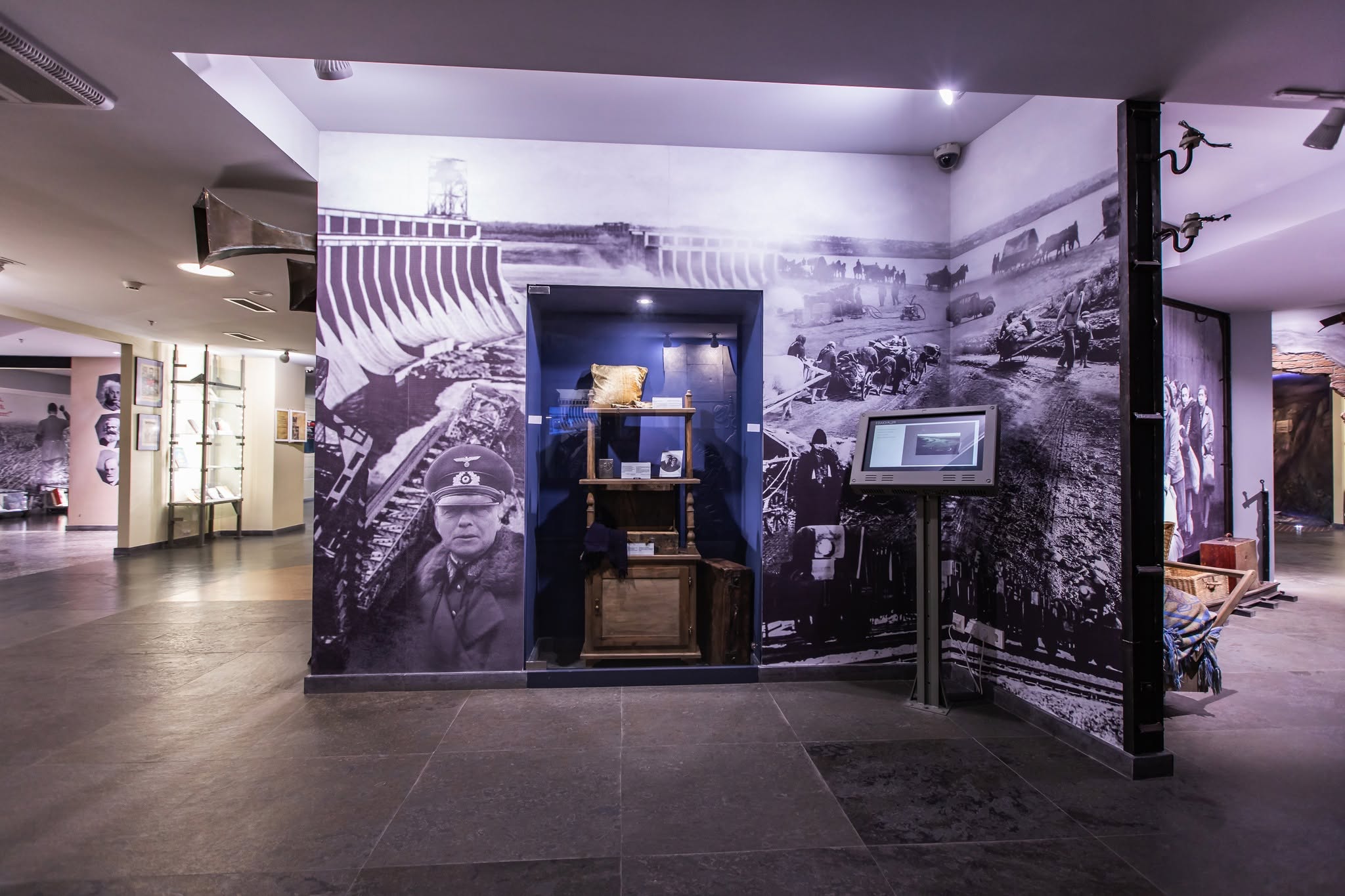
In mid-August 1941, two Wehrmacht tank divisions approached the city of Zaporizhzhia. The Germans had no advantage in this direction; however, seized by the general panic of the first months of the war, the main Soviet forces crossed to the left bank of the Dnieper; 3,000 soldiers were left on the island of Khortytsia to cover the retreat.
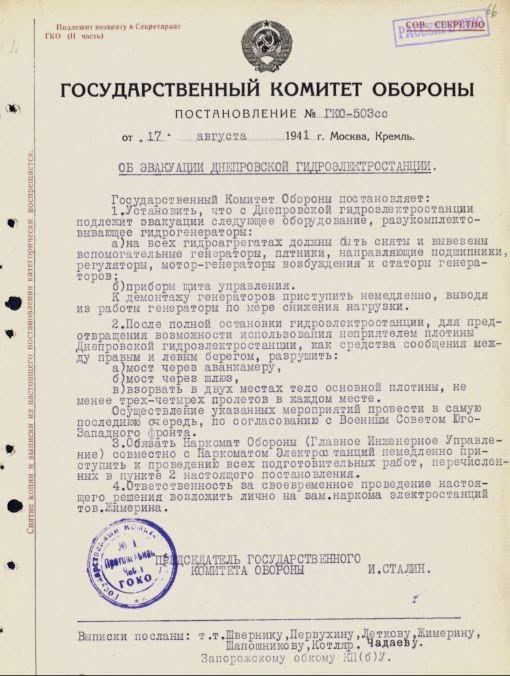
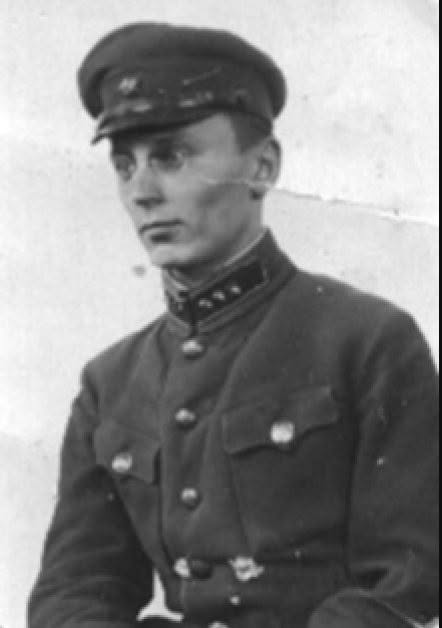
When leaving the city, in accordance with the “scorched earth” tactics announced by J. Stalin on July 3, 1941, it was necessary to disable the main facilities that could not be removed; the hydroelectric power station was a priority object. A secret order to destroy the station’s equipment and blow up the dam was signed by J. Stalin on August 17. However, the preparatory work was completed ahead of schedule: military engineers Boris Epov (representative of the General Staff) and Lieutenant Colonel Alexei Petrovsky (head of the management department of the Southern Front headquarters) disabled the station’s technical equipment and planted explosives. These actions took place in conditions of extreme secrecy. After the operation, Epov and Petrovsky were arrested by the local command, for whom the blowing up of the dam was a terrible surprise, and accused of being German saboteurs; the saboteurs were released only after Moscow intervened.
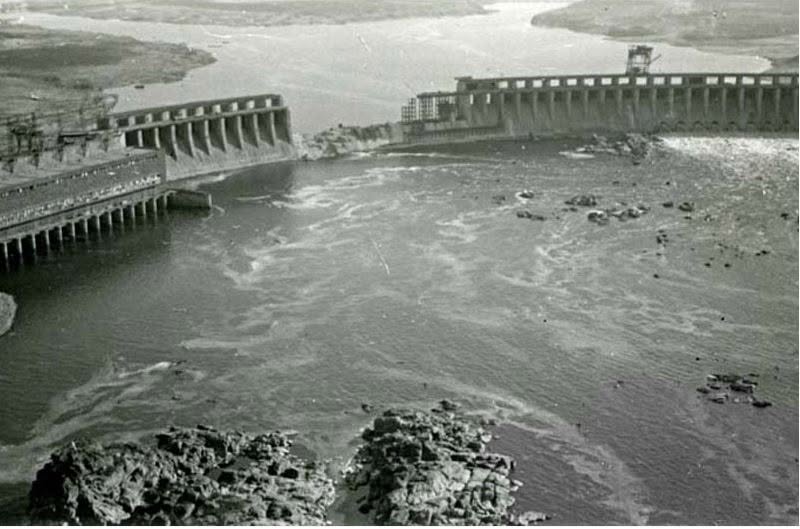
The explosion destroyed the power plant's engine room and caused a breach in the dam over 150 meters long. A wall of water rushed downstream of the Dnipro River. The water flooded the coastal area, the island of Khortytsia, and settlements downstream (approximately 15 km from the Dnipro Hydroelectric Power Plant). Neither the local civilian population nor the Red Army units, who were crossing the river or defending in the flood plains or on the island of Khortytsia, were warned.
No one recorded human losses in the hot tracks, so it is now impossible to determine the number of dead. Residents of the lower part of the city of Zaporizhzhia, coastal villages and farms suffered from the flood. Hundreds of residents farmed near the water in the summer season: they fished, grazed livestock, picked berries and plants. There were even more refugees, including Dnipropetrovsk residents, who moved in a southeasterly direction. Fleeing from the several-meter-high water avalanche, those who were healthy and strong climbed onto the roofs of houses and climbed to the tops of trees. And from there, those who were lucky enough to survive - both civilians and military – were taken out by locals on boats.
The high right bank protected the main enemy forces, so the Germans did not suffer significant losses. Perhaps the man-made disaster made it difficult for the Germans to cross the Dnieper and for some time slowed down the process of occupying the city: Zaporizhzhia remained Soviet after the explosion of the hydroelectric power station for another 46 days, until October 4, 1941. During this time, almost all the equipment of large factories was removed from the city. However, today it is known that the Zaporizhzhia direction was not a priority for the Wehrmacht and it was this factor that determined the speed of the enemy's advance. Moreover, the rising water helped the Germans build pontoon crossings downstream of the Dnieper. A year later, the occupiers repaired the station, it started working on new equipment brought from Germany; then, retreating in 1943, they again put it out of action…
In any case, an irreparably high price was paid for insignificant operational-tactical advantages. The Soviet troops were concentrated on the gentle left bank, and they were swept away by the flood. It was not easy to see the real picture of the fighting and assess the prospects from Moscow. And local initiative was not welcomed, and who would dare to contradict the Kremlin? So, we got the consequences of “remote leadership” and with the neglect of human losses typical of Stalinist leadership. If the explosion had been carried out on the day they left Zaporizhzhia, there would have been no talk of significant losses: the army had retreated from Dnipro, the mainstream of refugees had already rolled back to the east.
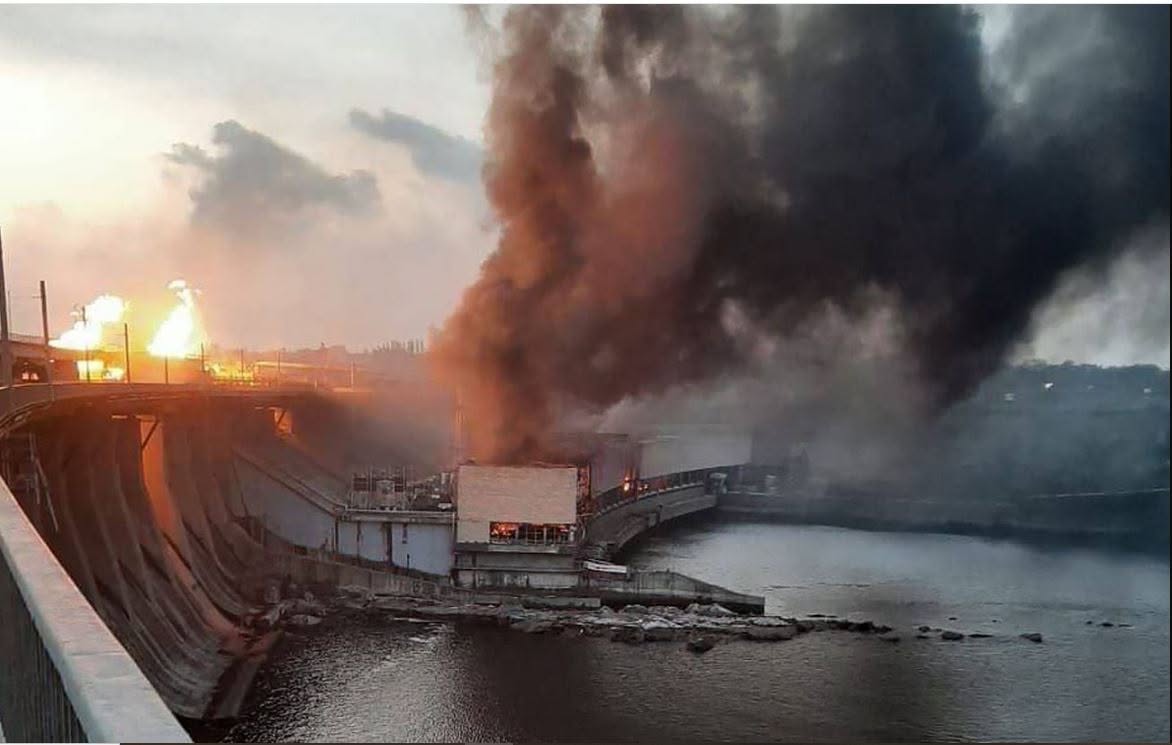
And today we are witnessing dozens of Russian missile attacks on the Dnipro Hydroelectric Power Plant (the most powerful one took place on March 22, 2024) with the aim of organizing a humanitarian catastrophe for an unconquered people who refuse to build a future according to the patterns of Stalinist policy.