Today, Ukraine joins the global community in honoring the memory of the victims of Babyn Yar. On September 29–30, 1941, thousands of Kyiv’s Jews, acting on orders from the occupation authorities, marched through the city streets toward the intersection of Dehtiarivska and Melnykov Streets (now Yurii Illienko Street). From there, children and the elderly, men and women, were directed to the Babyn Yar ravine. This site was chosen by the German Nazis for the mass murder of Kyiv’s Jews. In the span of just two days, 33,771 people were shot by units of the *Einsatzgruppe C* special detachment, the German Security Police, and other auxiliary units. Subsequently, Babyn Yar became a site of terror under the occupation; its victims included the mentally ill, prisoners of war, Roma, and clergy — thousands upon thousands of people of diverse faiths and ethnicities — all of whom the Nazis deemed a threat to the “New Order.”
Honoring the memory of the victims of Babi Yar, the Museum “Jewish Memory and Holocaust in Ukraine” held several events.
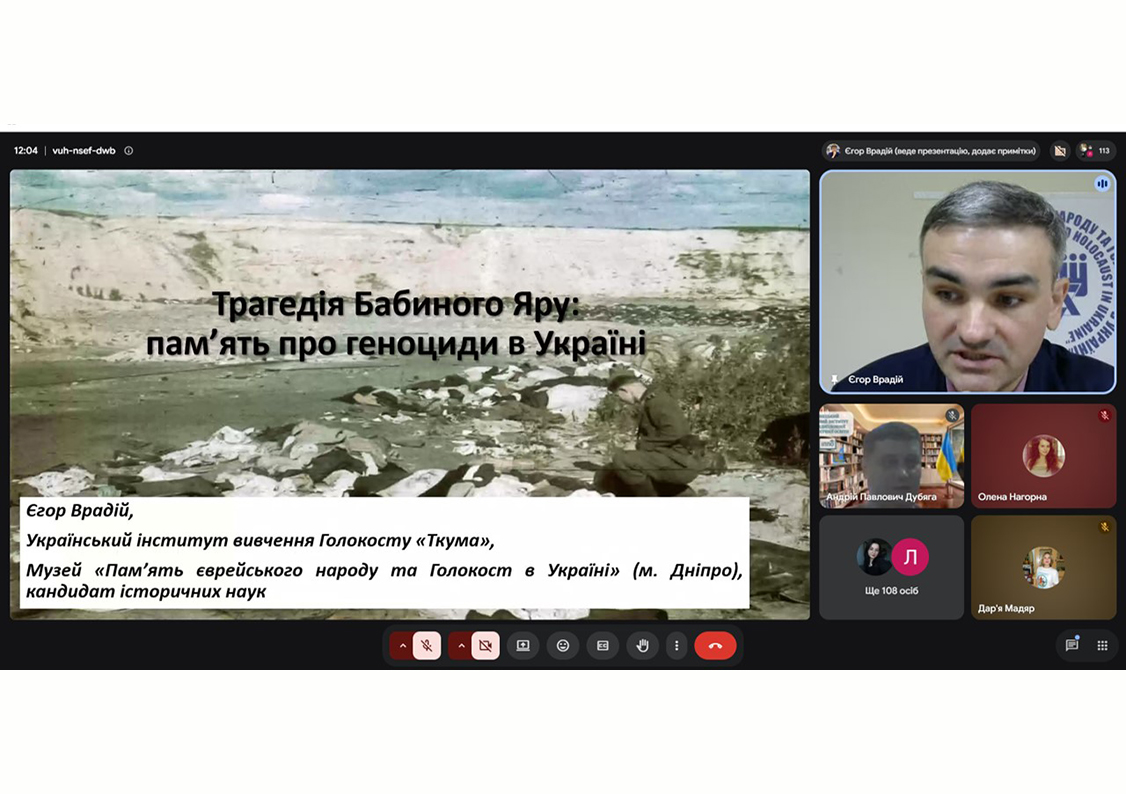
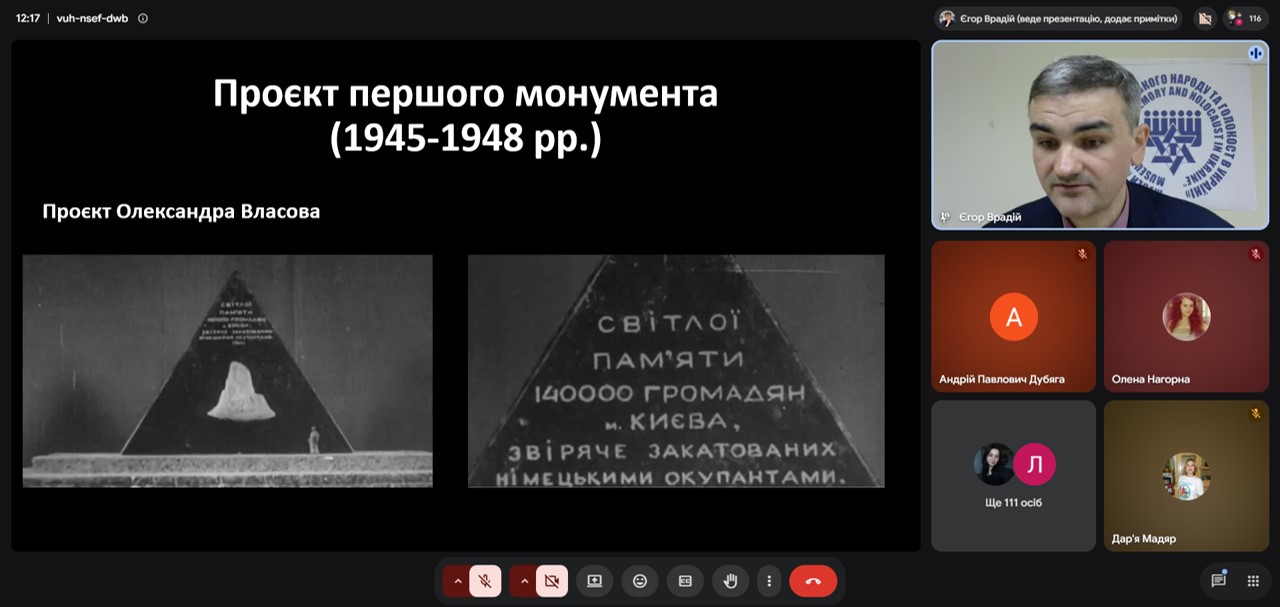
- On September 24, 2026, Dr. Yehor Vradii, the Museum’s Deputy Director for Research, participated in a presentation session titled “Babyn Yar: A History That Must Stand Against Genocide.” The event, held remotely, was organized by the Donetsk Regional Institute of Postgraduate Pedagogical Education (Kramatorsk). The session was attended by over 100 educators responsible for educational and upbringing activities within communities and educational institutions across the Donetsk region. Dr. Vradii introduced the educators to lesser-known aspects of the tragedy that unfolded on the outskirts of Kyiv in September 1941 and highlighted the courageous efforts of Ukrainian artists who, despite pressure from the Soviet authorities, conveyed an undistorted memory of Babyn Yar.
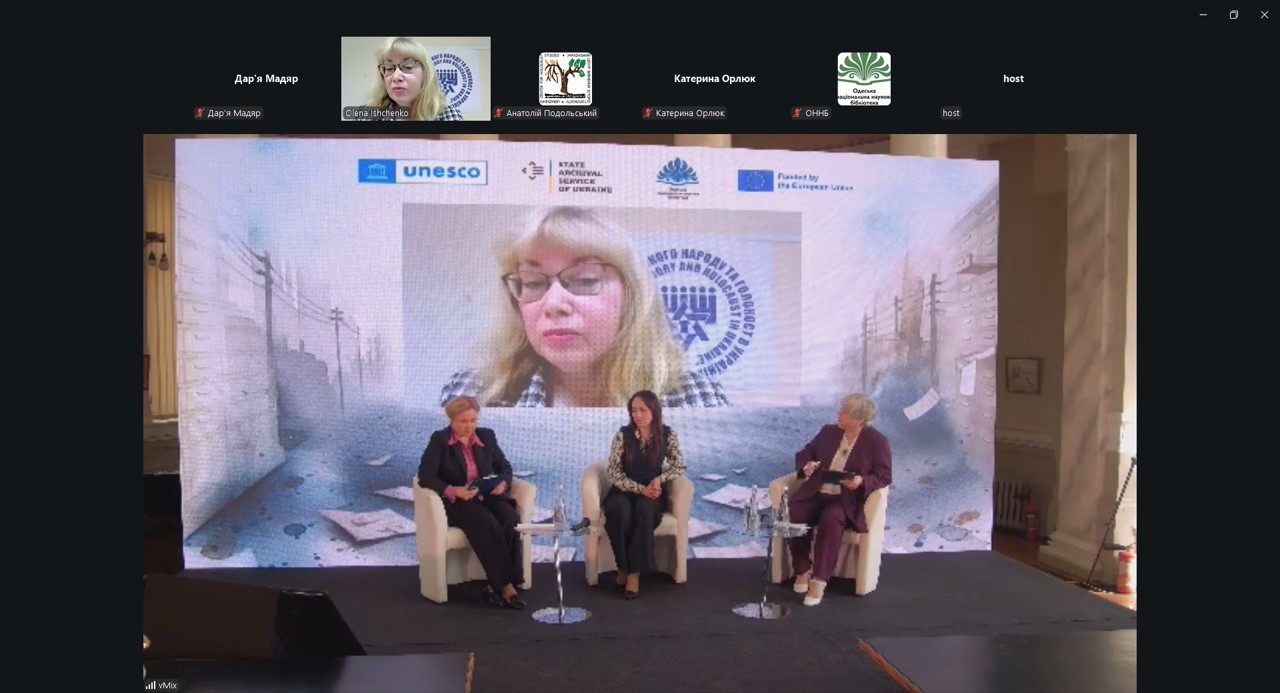
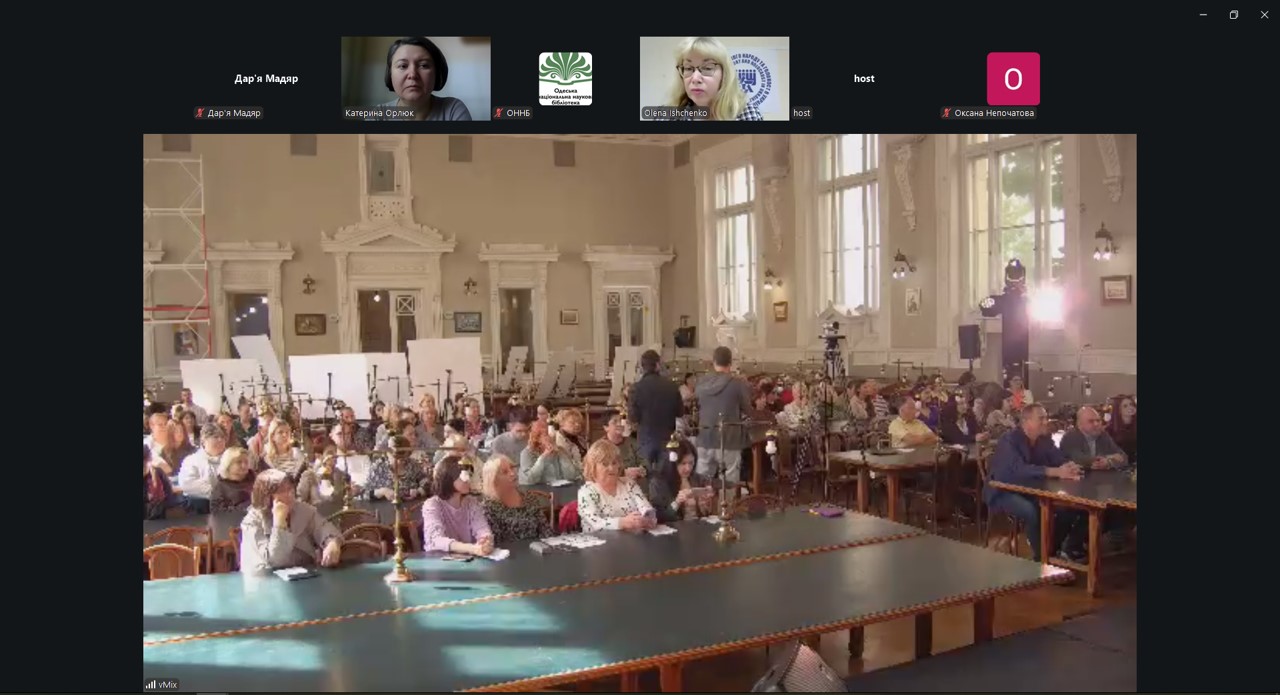
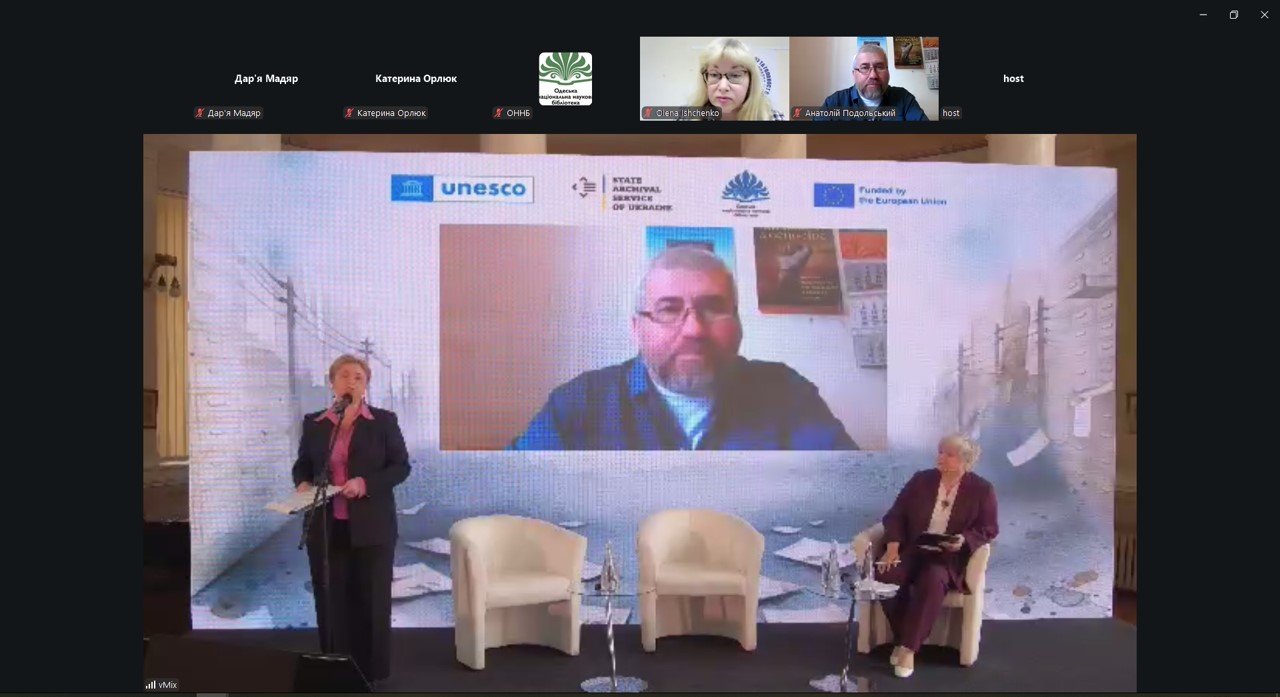
- On September 29, 2026, events commemorating the victims of Babi Yar took place at the Odesa National Scientific Library. Dr. Olena Ishchenko, a researcher at the “Jewish Memory and Holocaust in Ukraine” Museum, participated in a panel discussion on keeping the memory of the Holocaust alive. She shared her experience conducting online museum sessions during the Russo-Ukrainian War and discussed the challenges of striking the right thematic balance for diverse target audiences. The audience showed great interest in the issues raised.
We thank everyone who joined the commemorative events and paid tribute to the hundreds of thousands of people who fell victim to the misanthropic policies of Nazism.